I never imagined—let alone dreamed—that one day I would set foot in Tajikistan, a country I had only ever seen on a world map. Even stranger, I would visit the country known as the “Roof of the World” for only a single day.
It happened during my two-week journey through Uzbekistan. My travel companion Nico and I had begun searching for places we could visit near Samarkand. One option immediately caught our attention: a one-day trip to the famous Seven Lakes in Tajikistan. Without thinking too much about it, we immediately added the tour to our Uzbekistan itinerary.
Fortunately, Indonesian passport holders do not need a visa to enter Tajikistan.
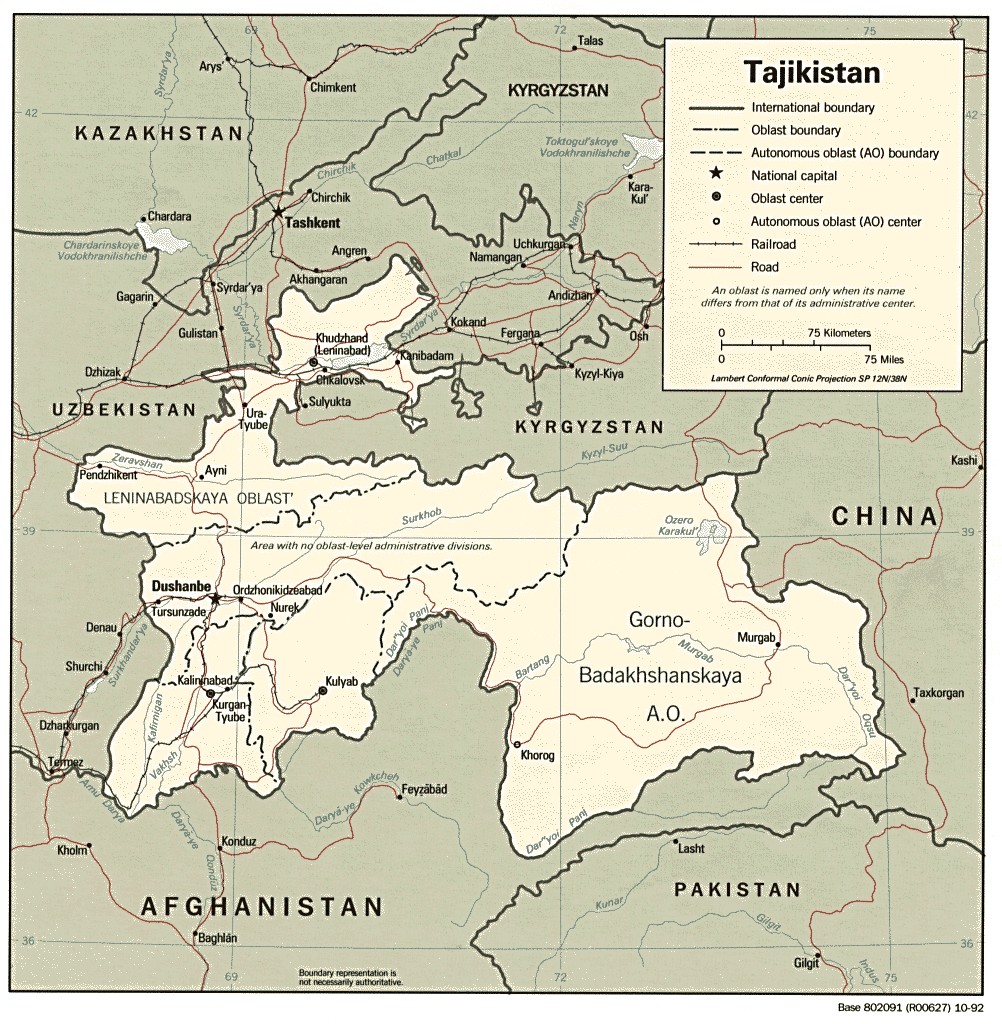
Jartepa–Sarazm Border Crossing
We got a tour recommendation from Sitora, our guide in Samarkand. For USD 150, we would get a private car and driver—not a crowded group tour. The catch was simple: there would be no guide, only a Tajik driver who spoke almost no English. The price already included a Tajik-style lunch. We accepted the offer right away because it was considered quite reasonable compared to market prices at the time. As for the language barrier, we were not too worried.
At exactly seven in the morning, a driver arrived outside our guesthouse in an electric car. He would take us to the Uzbekistan–Tajikistan border crossing at Jartepa, a little more than an hour away.
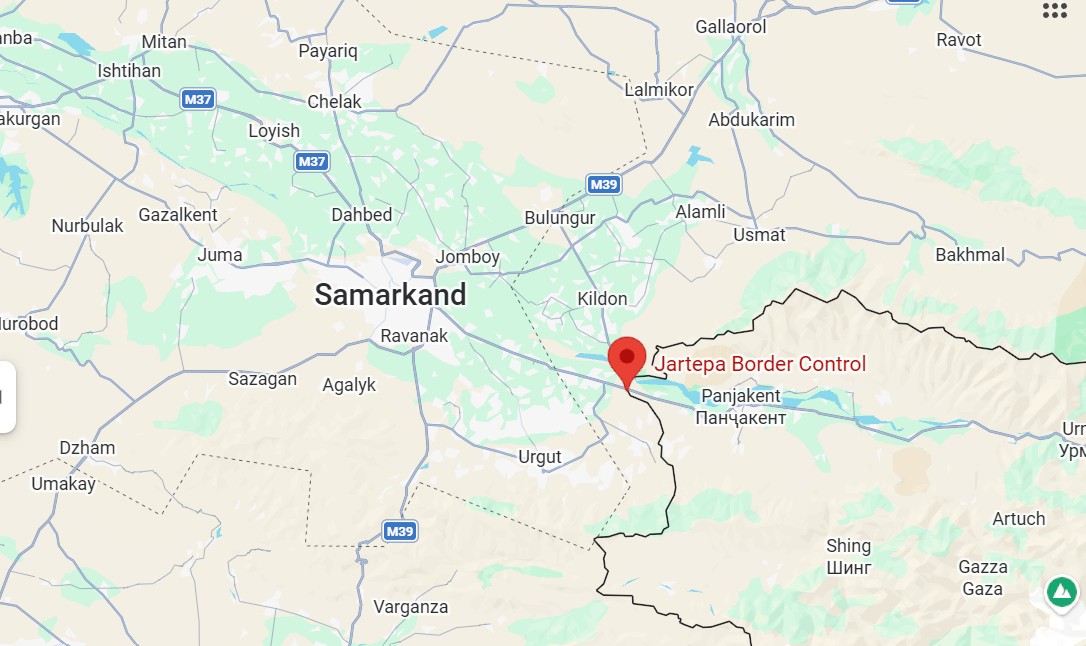
The arrangement sounded easy enough. He would drop us at the border, we would cross on foot, and another driver would pick us up on the Tajik side. Nico had already received the driver’s details and photograph beforehand.
As we left Samarkand behind, the scenery slowly changed. The tourist streets disappeared, replaced by ordinary neighborhoods and long stretches of open land. What struck me most was the absence of visible inequality. The houses looked modest but relatively uniform. I did not see giant mansions towering beside collapsing homes. Somehow, traces of the old Soviet socialism system still seemed to linger in the landscape.
The closer we got to Jartepa, the more dramatic the scenery became. In the distance, rows of mountains stretched across the horizon, their peaks coated in white like thick layers of cotton.
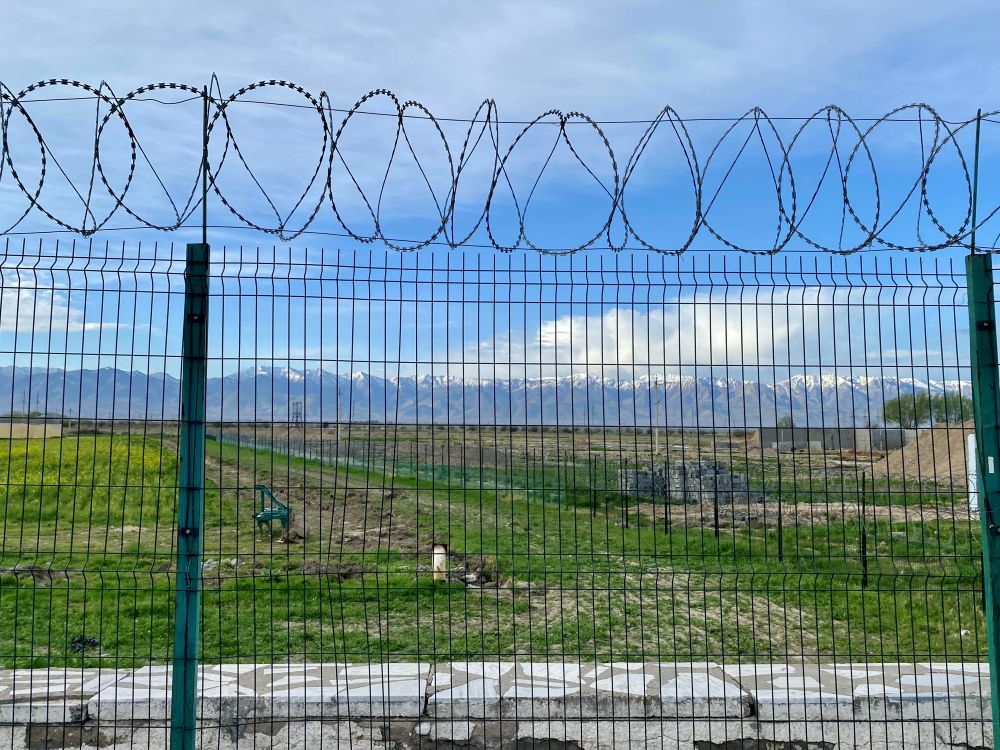
The cold hit me the moment I stepped out of the car at the border post at Jartepa. The sky was perfectly blue, clear of clouds, yet the wind cut straight through my clothes. Luckily, I had bought a cashmere jacket in Samarkand.
Before leaving, Nico reminded the driver to pick us up again at four in the afternoon at the same place.
That morning, the people crossing the border looked like they had done it hundreds of times before. Most were probably Tajiks and Uzbeks commuting between the two countries. The border itself was quiet.
At the Uzbek passport check, an officer examined our Indonesian passports carefully. He seemed fascinated by the colorful illustrations inside and asked what the images meant. I could only smile awkwardly from behind Nico.
After the passport check and an X-ray scan of our bags, we walked toward the immigration counter.
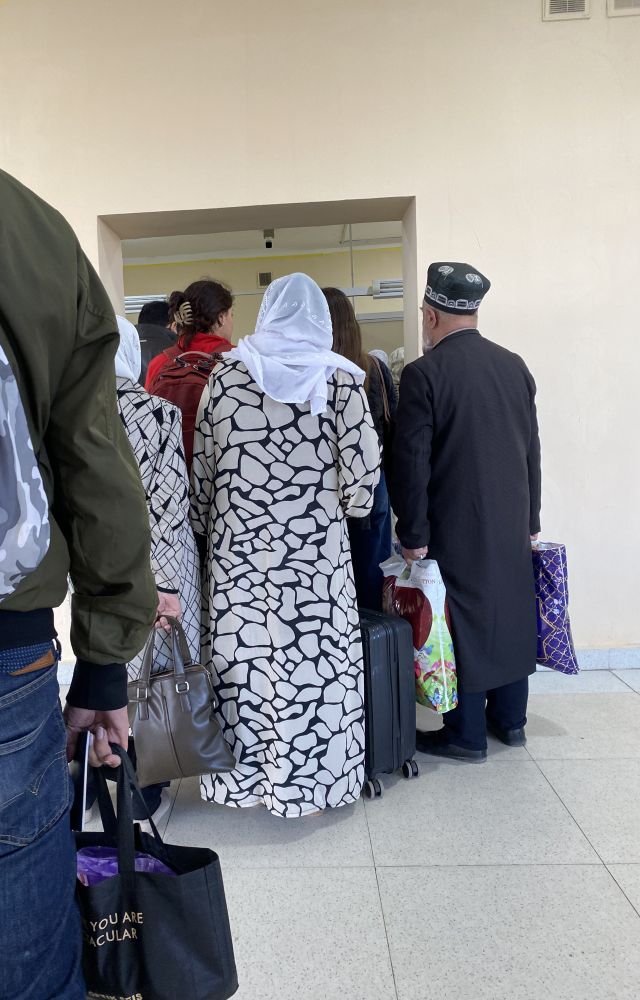
There were three immigration counters, so the line was not too long. When my turn came, the officer did not ask many questions. Then came the sound of “plok!” as the stamp hit my passport.
“Spasibo!” I said before walking away.
We had now officially exited Uzbekistan and were only one step away from entering Tajikistan.
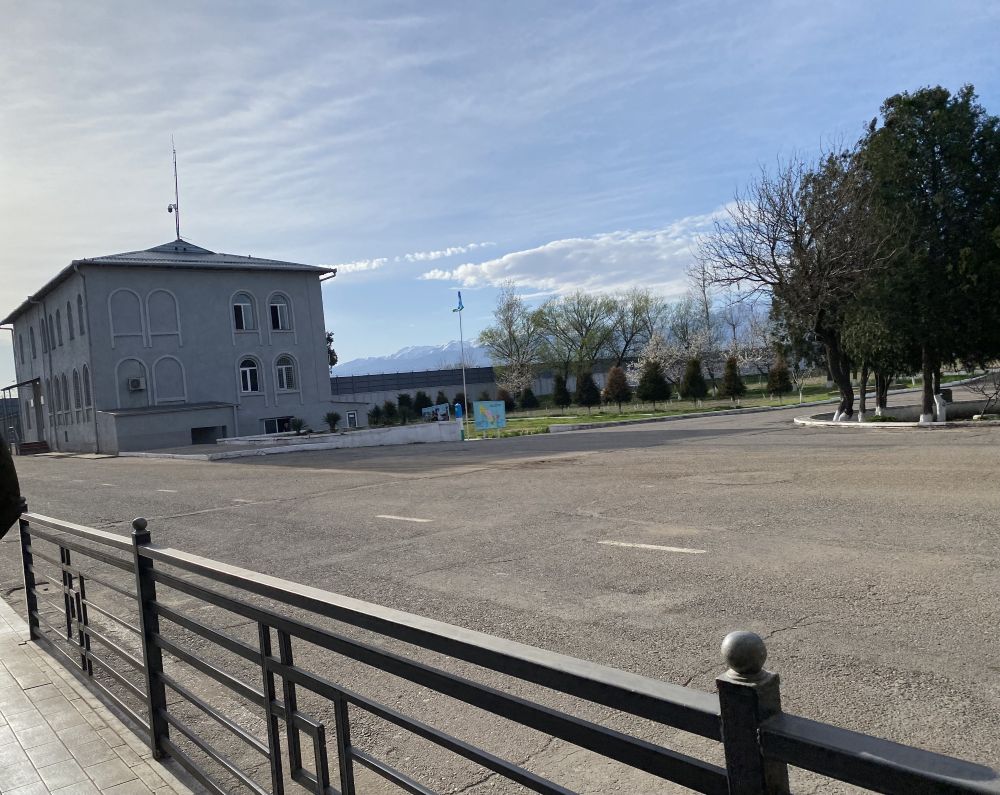
The immigration post at Sarazm, Tajikistan, was small and simple, with no clear queue. At first, I thought I had secured a good spot in line, but little by little I was pushed backward by a group of local women who had just arrived. Nobody seemed particularly bothered by it except me.
More than forty minutes later, I finally reached the counter. Just as the officer was about to process my passport, a woman suddenly slipped hers onto the desk beside mine. The officer immediately scolded her sharply, motioning for her to wait her turn.
Then came the satisfying sound of the immigration stamp landing on my passport.
“Spasibo,” I said instinctively before walking away.
And just like that, I was officially in Tajikistan.
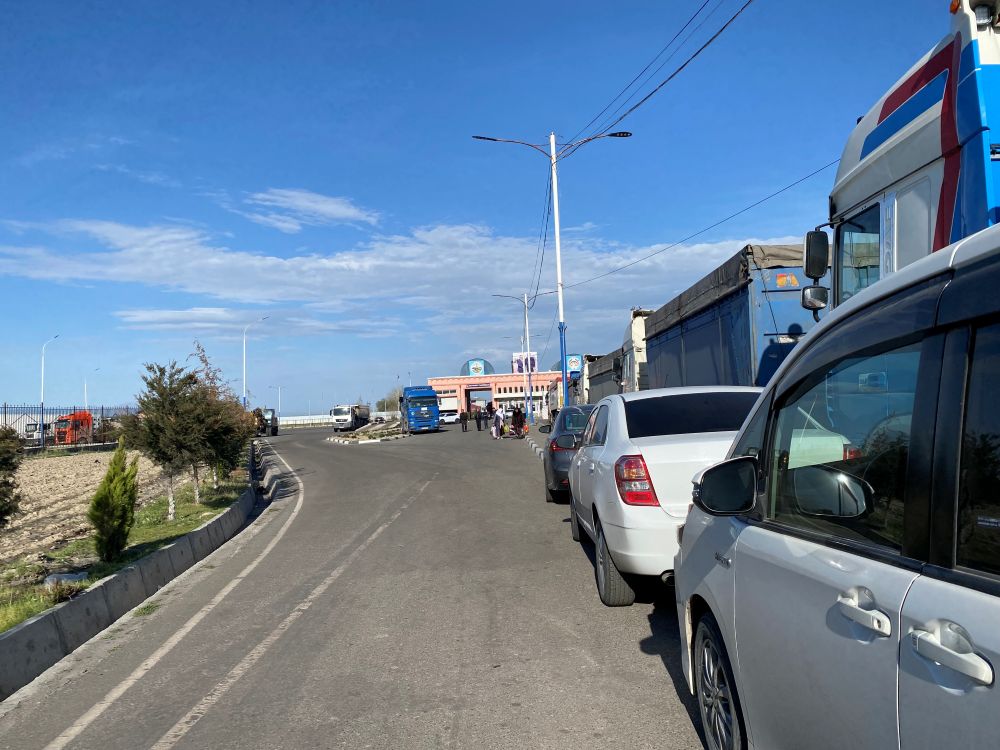
I saw a long line of large trucks waiting to enter Uzbekistan. We then walked toward the main road where the driver who would take us to the Seven Lakes was waiting.
Panjakent
Outside the border fence stood rows of parked cars and drivers waiting for passengers. Several approached us offering rides, but we shook our heads politely. Neither my phone nor Nico’s could get a signal despite our roaming packages, so contacting our driver was impossible.
Then, unexpectedly, a man walked straight toward Nico.
“Faiz?” Nico asked him cautiously.
“Yes. Welcome!” the man replied with a grin. Nico and I were relieved to find Faiz easily.
Faiz led us to his old white Toyota RAV4, and soon we were driving toward Panjakent, the nearest city to the border.
The road was beautiful beyond anything I expected. Mountains rose in the distance while green plantations stretched along the roadside. Small villages appeared only occasionally, scattered across the valleys.
Inside the car, we ate breakfast—Uzbek bread, oranges, and cakes we had bought in Samarkand. We shared it with Faiz, who accepted it with a shy smile.
I kept staring out the window.
Snow-covered mountains lined the horizon beneath a deep blue sky. Endless green fields rolled past us, and what looked like almond orchards spread across the landscape. There were almost no tall buildings, no giant billboards, no noise—only nature. Something about the openness of the scenery made me feel strangely relieved, as though my chest could finally breathe properly.
I became so absorbed in the view that I barely noticed when we entered Panjakent.
The city itself still carried strong Soviet echoes. Most of the tall buildings were aging apartment blocks from the Soviet era—old, weathered, but sturdy. Yet between them stood newer government buildings with unmistakably Tajik architecture. The streets felt spacious, with wide gaps between buildings and large courtyards.
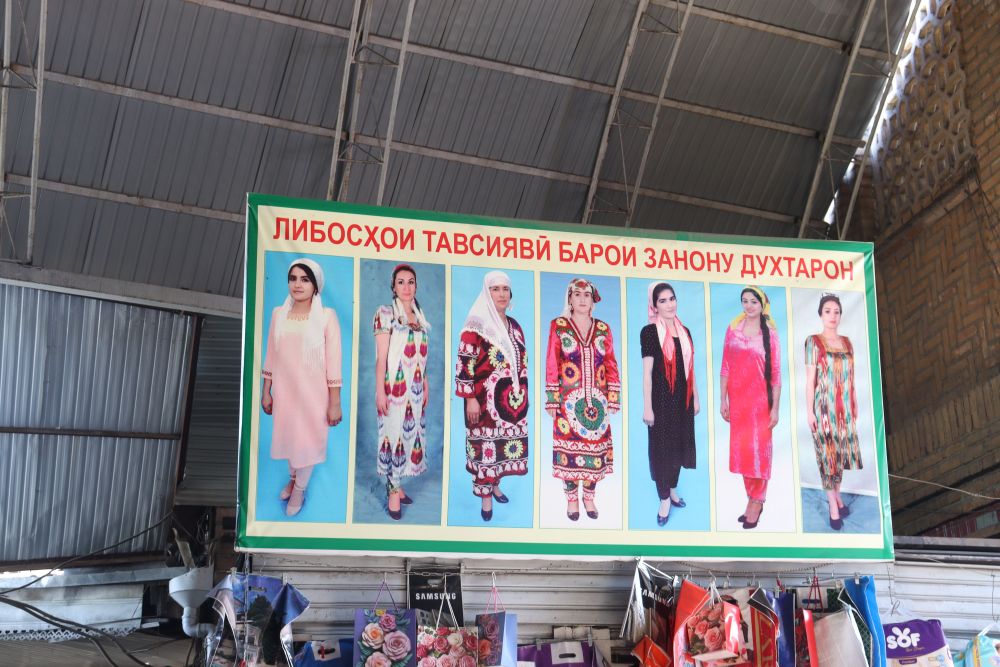
Another thing immediately stood out: almost every sign was written in Cyrillic. Latin letters had nearly disappeared entirely. Thankfully, I still remembered bits of the Russian alphabet from years ago.
Bazaar
Faiz then brought us to the city bazaar.
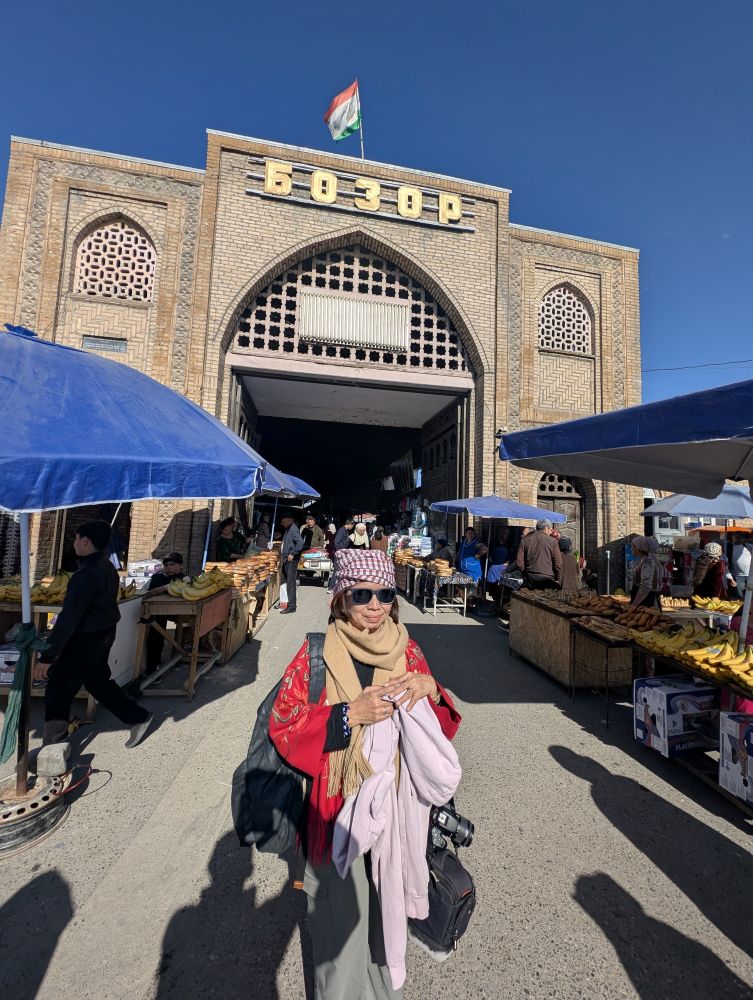
In Central Asia, a bazaar is simply a traditional market, though for me the word had always sounded exotic and romantic. The reality was much livelier.
The market was the beating heart of the city.
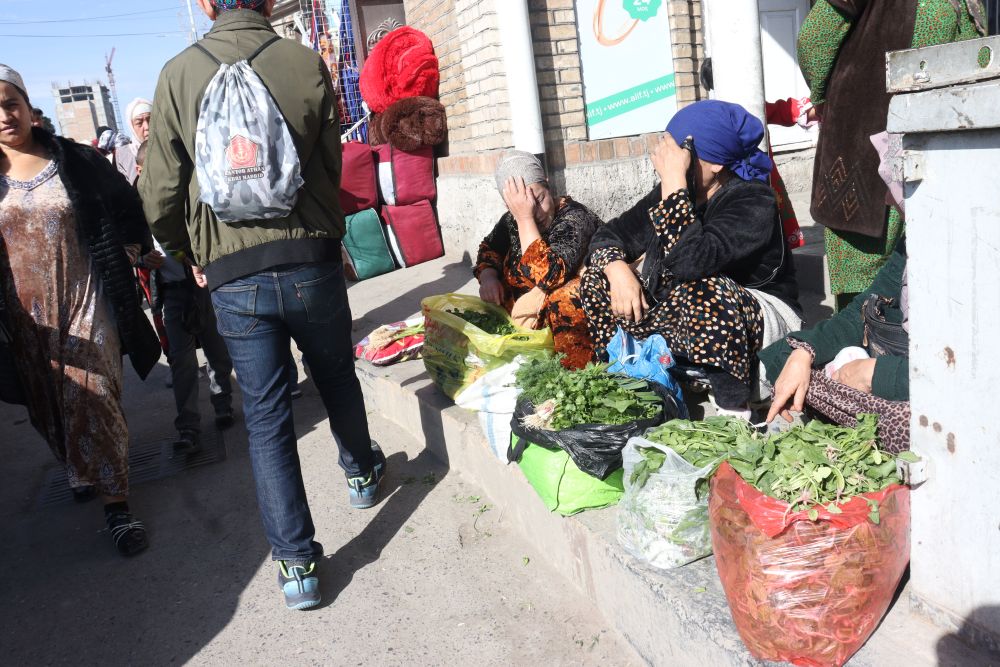
We parked by the roadside. Street vendors lined the roads selling clothes, vegetables, kitchenware, and household goods. The atmosphere buzzed with movement and noise. After the quiet countryside, the sudden energy felt overwhelming.
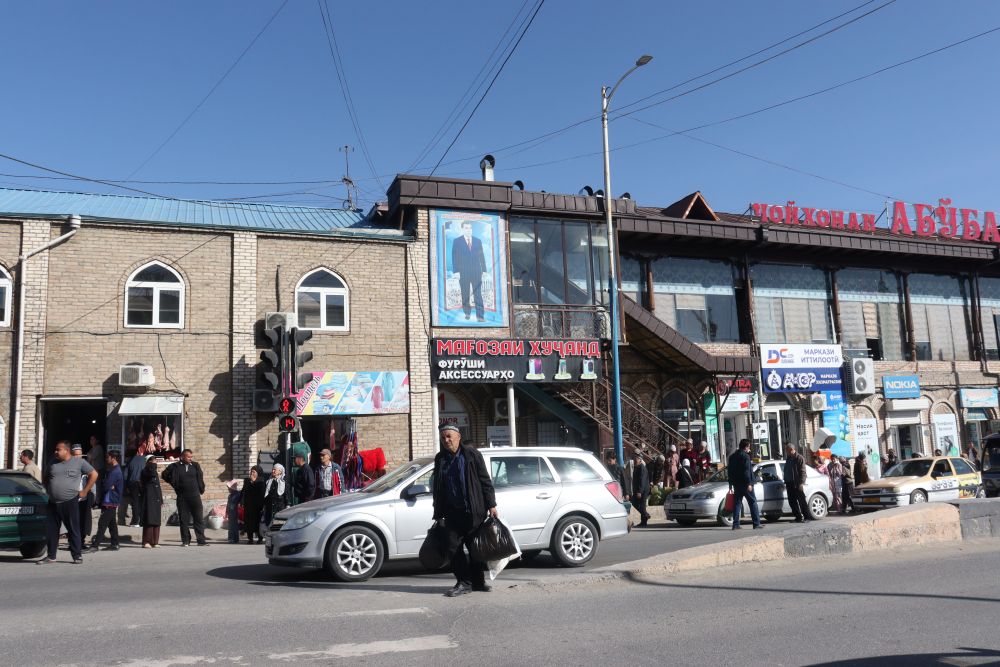
As we crossed the street at a zebra crossing, I glanced to my right and froze for a moment. Beyond the market, beyond the traffic and buildings, white mountains rose against the horizon like a painting.
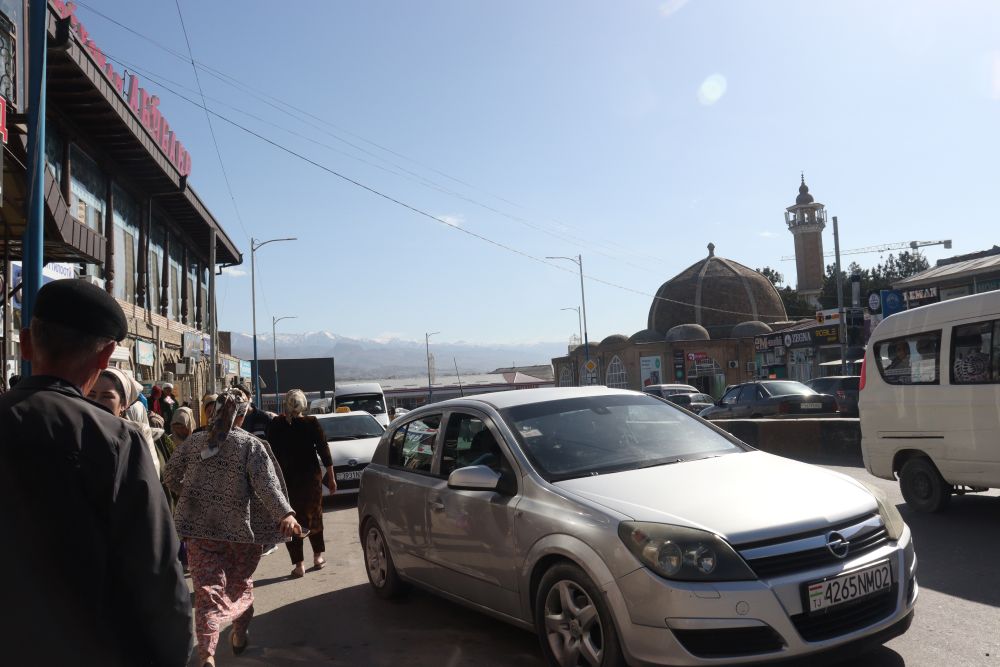
Many of the men wore traditional square black caps, while many women covered their heads with scarves tied toward the back in a distinctly Tajik style.
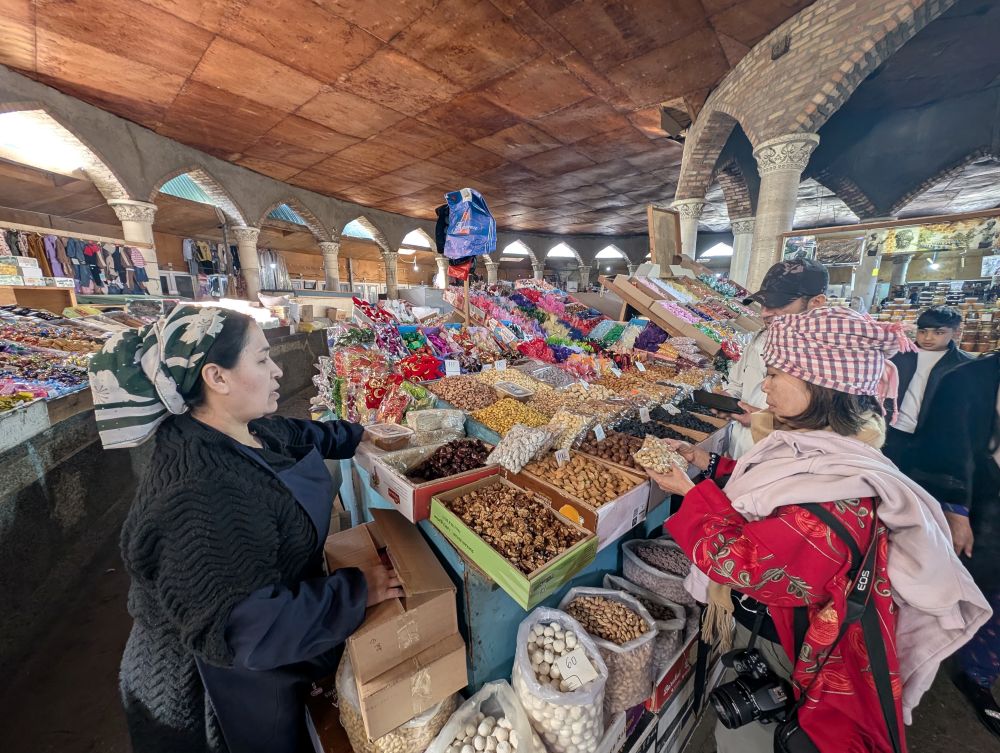
We entered the large market of Panjakent. Inside the market, I found something unexpected: cleanliness.
The building itself resembled a giant hall with high ceilings. Vendors sold everything imaginable—rice, root vegetables, fruits, nuts, meat, kitchen utensils. Even though it was technically a wet market, there was almost no unpleasant smell.
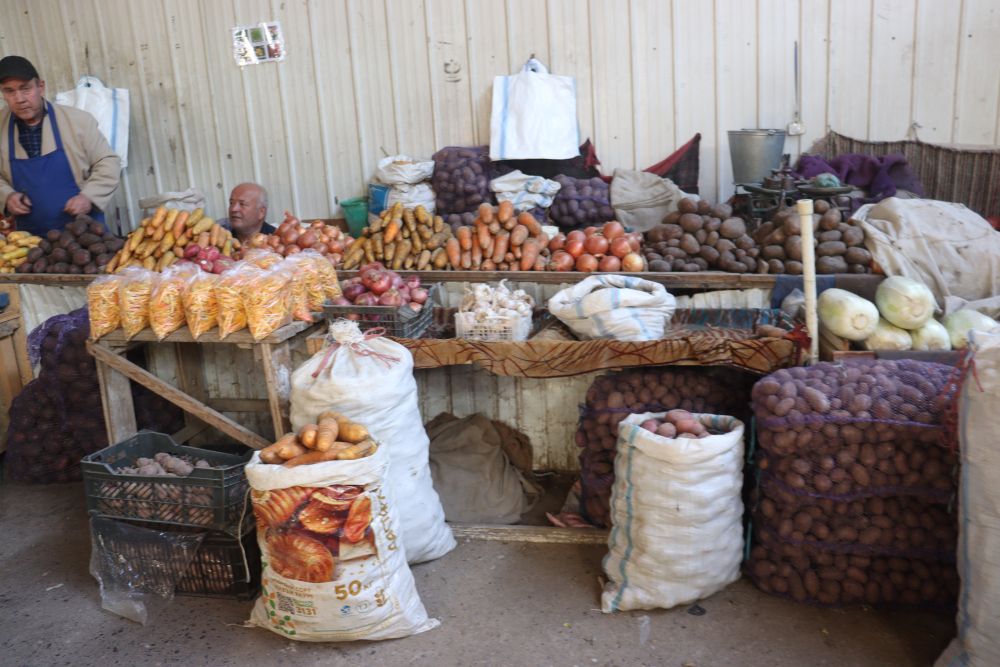
People moved constantly through the aisles. Buyers bargained, porters offered their services, and traders shouted offering their products across the room. I loved every second of it.
I bought a small bag of pistachios for the road ahead. Even though I had no Tajik currency, the seller accepted Uzbek som. Faiz helped translate the numbers for me.
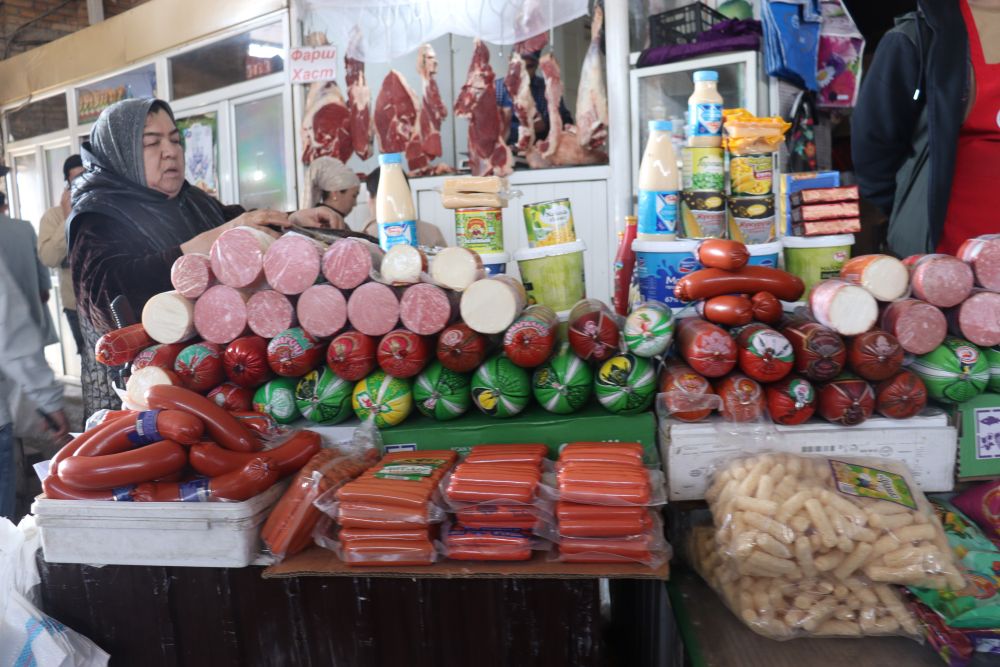
Then he brought us to a small stall owned by his mother, who sold sausages and salami. He introduced her proudly, and despite the language barrier, she welcomed us warmly with a smile that needed no translation.
After leaving the market, we crossed the street once more and returned to the car.
Before starting the engine, Faiz turned around and asked in broken English whether we wanted to buy anything else.
“No shops in the mountains,” he explained carefully.
I was still full from breakfast, so we decided to continue.
We got back into the car, unaware that the journey ahead would become one of the most unforgettable adventures of my life.
(to be continued)